

Northeast: dress for wet. A shirt that moves sweat, something warm over it, and a rain jacket you'll actually put on. Forty-five degrees and drizzly is the most dangerous forecast in trail running, and it doesn't look dangerous at all.
Southwest: dress for the swing. Start ready for a 38-degree dawn and be able to get down to one layer by mile four, when the same trail is sitting at 65.
Both regions run the same arc — cold, then hot, then cold again. What changes is what your sweat does inside it. In the Northeast it stays on you. In the Southwest it vanishes so fast you don't notice you're losing heat until you're already losing it.
YOU AT MILE ONE IS NOT YOU AT MILE EIGHT
That's the whole thing, right there. Every fall trail run has the same three acts, and most people only dress for one of them.
Stiff in the parking lot. Body hasn't turned the heat on yet.
Furnace kicks over. Sweating in October. Overdressed.
Summit. Wind. All that sweat working against you.
That third act is where fall runs go bad. Not because it got colder — because you did, fast, while wet.
The goal was never "be warm." The goal is to be able to change your mind fast, three times. Warmth is easy. Adjustability is the skill.
YOUR BODY DITCHES YOUR HANDS FIRST. ON PURPOSE.
Three things are happening in there. Learn them once and every clothing decision gets easier forever.

1. YOUR BODY GIVES UP ON YOUR HANDS FIRST
When you get cold, your body protects the important stuff — heart, lungs, brain — by squeezing the blood vessels in your skin and limbs nearly shut. Less warm blood out to the edges, more kept in the middle.
There's a number on it: your body starts cranking up its own insulation once skin temperature drops below about 95°F, and goes all-in around 89°F (Institute of Medicine).
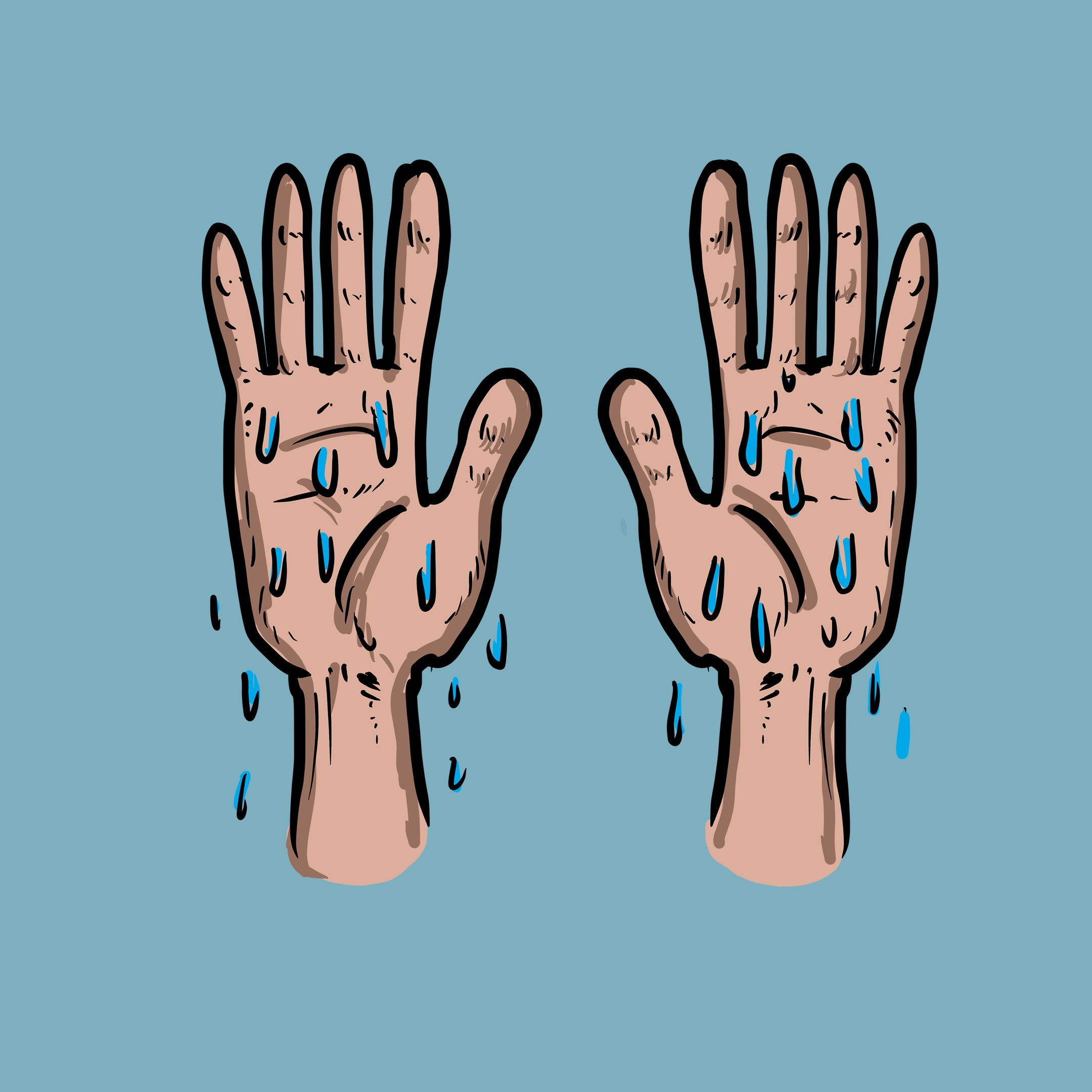
Your hands are always first to go. Lots of skin, not much meat, almost no fat to insulate them. Your torso is a well-insulated cabin. Your fingers are a screened-in porch.
2. WET ISN'T "COLD, BUT DAMP." WET IS A DIFFERENT ANIMAL.
Water pulls heat off your body roughly 70 times faster than air at the same temperature, and wet clothing gives you a fraction of the warmth dry clothing does.
A soaked shirt isn't an annoyance. It's a refrigerator you strapped on yourself. The Park Service puts sweat management right in its hypothermia guidance: "avoid sweating by dressing in layers" and wear something that moves moisture off you (NPS). Sweat isn't a side effect of the run. It's the thing you're managing.
Whether that sweat leaves you is decided by the air, not by you. Humid air is already carrying about all the moisture it can hold, so your sweat has nowhere to go. Dry air takes it instantly. That single difference is why the same arc feels like two different sports on opposite sides of the country.
3. WIND MAKES ALL YOUR MATH WRONG
Moving air strips heat off bare skin far faster than still air — that's why the National Weather Service publishes a whole chart about it. The number on your phone is a rough guess at what a ridgeline is about to do to you.
THE NORTHEAST
IT'S THE WET, NOT THE COLD
New England's fall danger isn't the temperature. It's staying wet at that temperature.
Take North Conway, New Hampshire — a fair stand-in for New England trail country. Over October, highs slide from 63°F down to 52°F and lows from 43°F down to 33°F. There's a 27% chance of a wet day, every day, all month, adding up to about 4 inches of rain (Weather Spark).
Twenty-seven percent sounds harmless. It isn't.
The Green Mountain Club calls out 40 to 50 degrees and rainy as "particularly dangerous weather for hypothermia." Not 10 degrees. Not a blizzard. Forty-five and drizzly.

THREE WAYS NEW ENGLAND STACKS THE DECK:
Climbing costs you. About 5 degrees colder for every 1,000 feet you climb. A comfortable 50-degree trailhead is a 37-degree summit after 2,500 feet. Before wind.
The trees are lying to you. You start in still, sheltered woods feeling great. Then you pop out above the treeline and the ridge hits you with everything it has.
Wet leaves are banana peels. More stumbling means more stopping, which means more standing around damp.
The light goes early. October takes about an hour of daylight off the calendar, and the temperature drops with it.
THE NORTHEAST RULE: YOU'LL GET WET FROM THE INSIDE BEFORE THE SKY EVER TOUCHES YOU. BUILD FOR WET BEING SURVIVABLE, NOT JUST AVOIDABLE.
THE SOUTHWEST
GORGEOUS, DRY, AND DETERMINED TO MAKE YOU CARRY EVERYTHING YOU OWN
Out here the whole day's temperature range happens inside one run.
Moab, Utah in October: highs fall from 77°F to 61°F, lows from 51°F to 38°F, wind averages a polite 7 mph, and the odds of a muggy day are basically zero all month (Weather Spark).
Late-October Moab swings 23 degrees between dawn and afternoon. October Phoenix swings 27. In New England a 20-degree spread politely spaces itself across a whole day. Out here you cross most of it during a sunrise start.

THREE WAYS THE DESERT STACKS THE DECK:
Up and down are backwards here. In canyon country you run down into heat and up into cold. The Grand Canyon gets 5.5 degrees warmer for every 1,000 feet you drop. The North Rim at 8,297 feet and Phantom Ranch at 2,460 feet — a 32-degree spread built into a single run.
The sun is the heat, not the air. A 55-degree morning in full desert sun has nothing in common with a 55-degree morning under New England clouds.
Dry air hides how much you're sweating. It evaporates before you notice it, so you drink too little and take the morning chill less seriously than you should.
THE SOUTHWEST RULE: YOUR LAYERS AREN'T CLOTHING, THEY'RE LUGGAGE. WHATEVER YOU START IN, YOU'RE CARRYING.
SIDE BY SIDE
| NORTHEAST | SOUTHWEST | |
|---|---|---|
| The threat | Wet and wind | Big swings and sun |
| Oct range | 63→52°F / 43→33°F | 77→61°F / 51→38°F |
| Air | Damp. 1 in 4 days wet | Bone dry. Zero muggy days |
| Jacket | Waterproof. Non-negotiable | Wind only. Packs small |
| Your sweat | Won't evaporate. Stays on you | Evaporates instantly |
| Act three | Slow, damp chill that builds | Fast, sharp drop when you stop |
| The goal | Still works when soaked | Disappears when you don't need it |
HOW TO RUN THE ARC
Three acts, three moves. None of them are hard. The trick is doing all three on the same run.
START COLD ON PURPOSE
Underdress by exactly one layer. You should be a little uncomfortable in the parking lot and completely fine by minute five.
This isn't toughness, it's math. Sweat you never make is sweat that can't chill you in act three. Starting warm is borrowing against the end of your run.
VENT BEFORE YOU SWEAT, NOT AFTER
Most people wait until they're soaked to open a zipper. By then the shirt's already wet and it's staying wet — especially in the East, where the air won't take the moisture back.
Dump heat early and in small increments. Half-zip down at the first climb. Sleeves up before the sun clears the rim. You're aiming to run warm and dry, not cool and wet.
HAVE SOMETHING DRY AND COVERING READY
The summit, the ridge, the descent, the moment you stop. Whatever you put on here needs to be dry, and it needs to go on fast — before you cool, not after.
Extremities first. A dry cover on your hands and head does more for act three than another torso layer.
AND IN FALL, ADD LIGHT
Reflective on your moving parts. Hands, wrists, ankles, shoulders. Motion is what a driver's eye catches, so reflectivity on your arms reads from much farther out than a strip on your back.
A headlamp you actually brought. Fall's whole trick is that it gets dark 20 minutes earlier than you planned for.
THREE QUESTIONS, NOT FOUR LAYERS
Forget "base, mid, shell" as a shopping list. It's three questions, and you answer them differently depending on where you live.
1. WHAT'S AGAINST YOUR SKIN?
Both regions: no cotton. Not ever. Not the free race tee. Not the one you like. Cotton soaks up sweat and holds it against you.
Merino wool, or a merino blend. It still keeps you warm-ish when it's damp — in New England in October, that's the whole reason to own it.
The lightest sweat-moving synthetic you've got, ideally with sleeves for sun. You want it to dry fast when it warms 20 degrees in 90 minutes.
2. WHAT CAN YOU TAKE OFF WITHOUT STOPPING?
This is the question that decides whether any of the rest works. A layer that makes you stop, drop your pack, peel your jacket, and haul a shirt over your head is not a layer. It's a delay.
Go for adjustable, not just removable:
- Half-zips over crewnecks
- Hoods over hats you'll lose
- Sleeves that push up and stay up
- Handwear that changes jobs without ever leaving your hand
3. WHAT'S ON THE OUTSIDE?
An actual rain jacket that still lets some air through. Pit zips if you can get them. Put it on when it's 45 and raining — nobody's ever needed a rescue for being slightly too toasty.
A wind jacket that stuffs into its own pocket. Waterproofing is dead weight in a month with an 11–15% chance of rain and no humidity to speak of.

TWO KITS. BUILT. GO.
45°F, good chance of rain, 2,000 ft of climbing
- Merino long-sleeve against the skin
- Light fleece with a zip
- Packable rain jacket, hood included
- Wind-blocking tights or shorts + calf sleeves
- Buff or thin beanie
- Handwear that changes jobs without coming off
- Shoes that drain
- Reflective gear + headlamp after 3 p.m.
Dawn start, 40°F at the trailhead, 68°F at the finish
- Light sun hoody against the skin
- Packable wind jacket — gone by mile two
- Shorts or thin tights
- Hat and sunglasses from minute one
- Handwear that changes jobs without coming off
- More water than the temperature suggests
- Reflective gear + headlamp for dawn starts
Same item on both lists. Here's why.
THE LAYER WORTH FIXING FIRST

You nail the torso. Shirt, fleece, jacket, dialed. Twenty minutes in your core is cranking, you're sweating — and your fingers are still cold. Because your body shut the taps to your hands before your core ever got going.
So you put gloves on. Ten minutes later those gloves are a swamp, and now you've got wet fabric wrapped around the fastest-cooling part of your body. In New England, that damp glove becomes a real problem the instant the wind finds you. In the desert, you pull them off at mile three and spend the rest of the run holding them like a tiny surrendered flag.
Then it's cold again on the descent. Fish them back out. Now they're gross and cold.
Stop. Stuff. Restart. Repeat. That's the gear shuffle, and it's the dumbest tax in trail running.
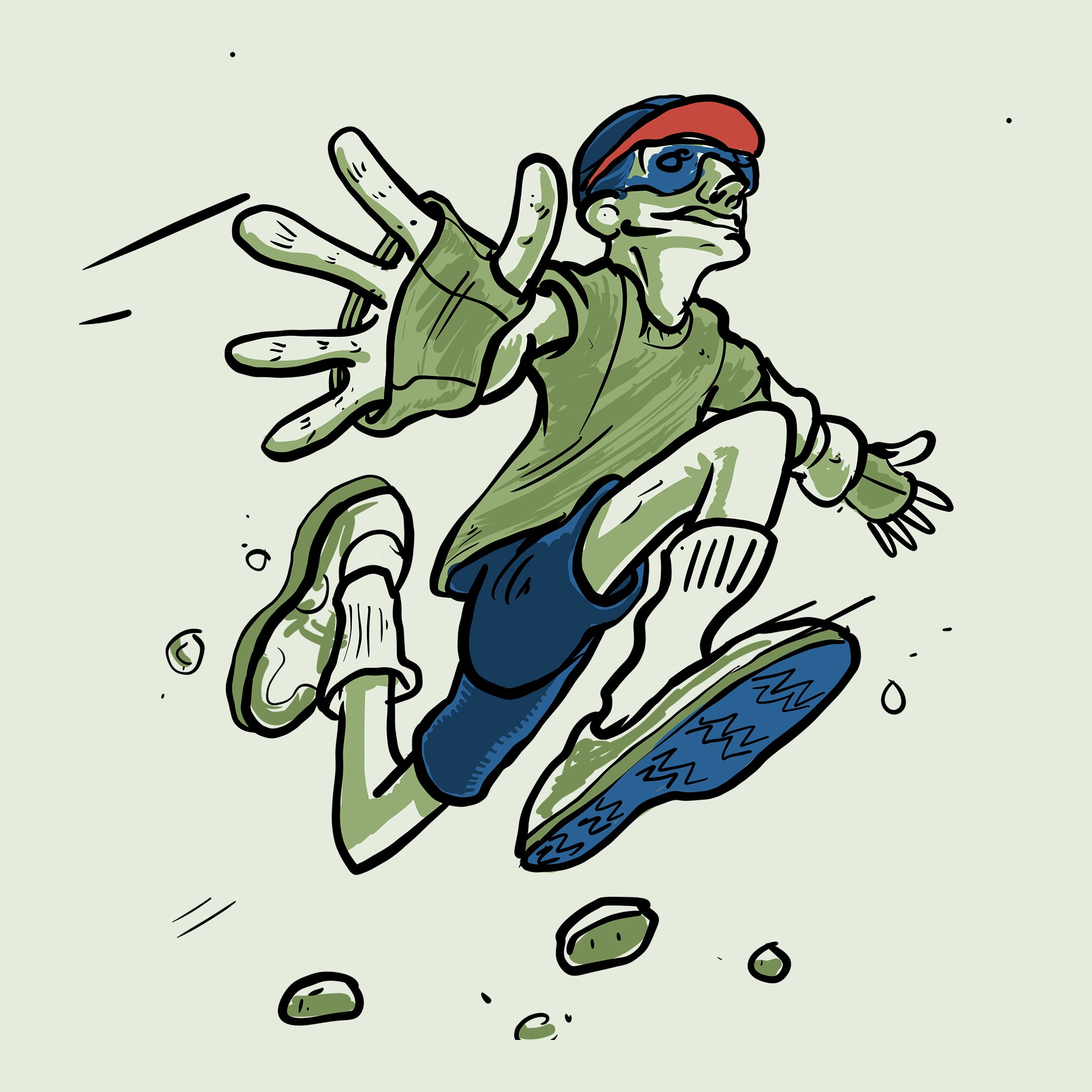
Flipmits exist because of this exact loop. One piece covers all three acts: glove for the cold start, sweatband for the hot middle, glove or full mitten again when act three shows up — without ever leaving your hand.
Nothing to carry. Nothing to stow. Nothing slapping your hip.
SHOP NOW
FIVE THINGS THAT GO WRONG EVERY FALL
Dressing to feel great at the trailhead. You should feel a little cold for the first five minutes. Cozy standing still means overdressed running.
Trusting the number on your phone. Add wind. Subtract about 5 degrees per 1,000 feet of climbing. Look at the clouds. Then get dressed.
Bringing a jacket you won't put on. A rain jacket living in your pack during a 45-degree rain is not a jacket. It's a souvenir.
One-way layers. If you can only take it off and never dial it down, it's a liability with a zipper.
Perfecting the torso, forgetting the hands. Your core will be fine. Your fingers decide whether you had a good time.
COMMON QUESTIONS
When do I need to start layering for fall trail runs?
Below about 50 degrees, have a plan. Between 50 and 60, one sweat-moving layer plus adjustable handwear usually does it. Below 40, add something warm in the middle no matter where you live.
Is trail running different from road running for this?
Considerably. Trails mean more climbing, more exposure, and slower, stop-and-go pacing. Road runners can dress for one condition. Trail runners have to dress for a range.
Why do my hands get cold when the rest of me is warm?
Your body protects your core by squeezing shut the blood vessels in your hands and feet. It starts once skin temperature drops below roughly 95 degrees. Hands have a lot of surface area, very little mass, and almost no fat — so they cool off fastest and take the longest to come back.
What's the most dangerous fall running weather?
Cool and wet. The Green Mountain Club flags 40 to 50 degrees with rain as especially dangerous for hypothermia — worse than colder, dry weather, because wet clothes barely insulate and water pulls heat off you around 70 times faster than air.
Why do I get cold right after I stop running?
Three things land at once: your heat production drops, the sweat you made mid-run is still on you, and stopping usually means you've reached somewhere more exposed. The fix is having a dry covering layer — hands and head first — that goes on before you cool down, not after.
How many layers do I actually need?
Northeast: three — something that moves sweat, something warm, something waterproof. Southwest: two plus shedables — sun hoody, packable wind jacket, and handwear and a hat you can adjust on the move.
The Northeast asks: does my setup still work when I'm soaked?
The Southwest asks: can my setup disappear when I don't need it?
Answer the right question for your zip code. Keep your hands adjustable. Spend the fall running instead of fidgeting.

- Institute of Medicine — Physiology of Cold Exposure
- National Weather Service — Wind Chill Chart
- Green Mountain Club — Weather Conditions & Hypothermia Risk
- Weather Spark — October Climate, North Conway, NH
- Weather Spark — October Climate, Moab, UT
- Arizona State Climate Office — Climate of Phoenix
- Grand Canyon National Park (NPS) — Weather and Climate