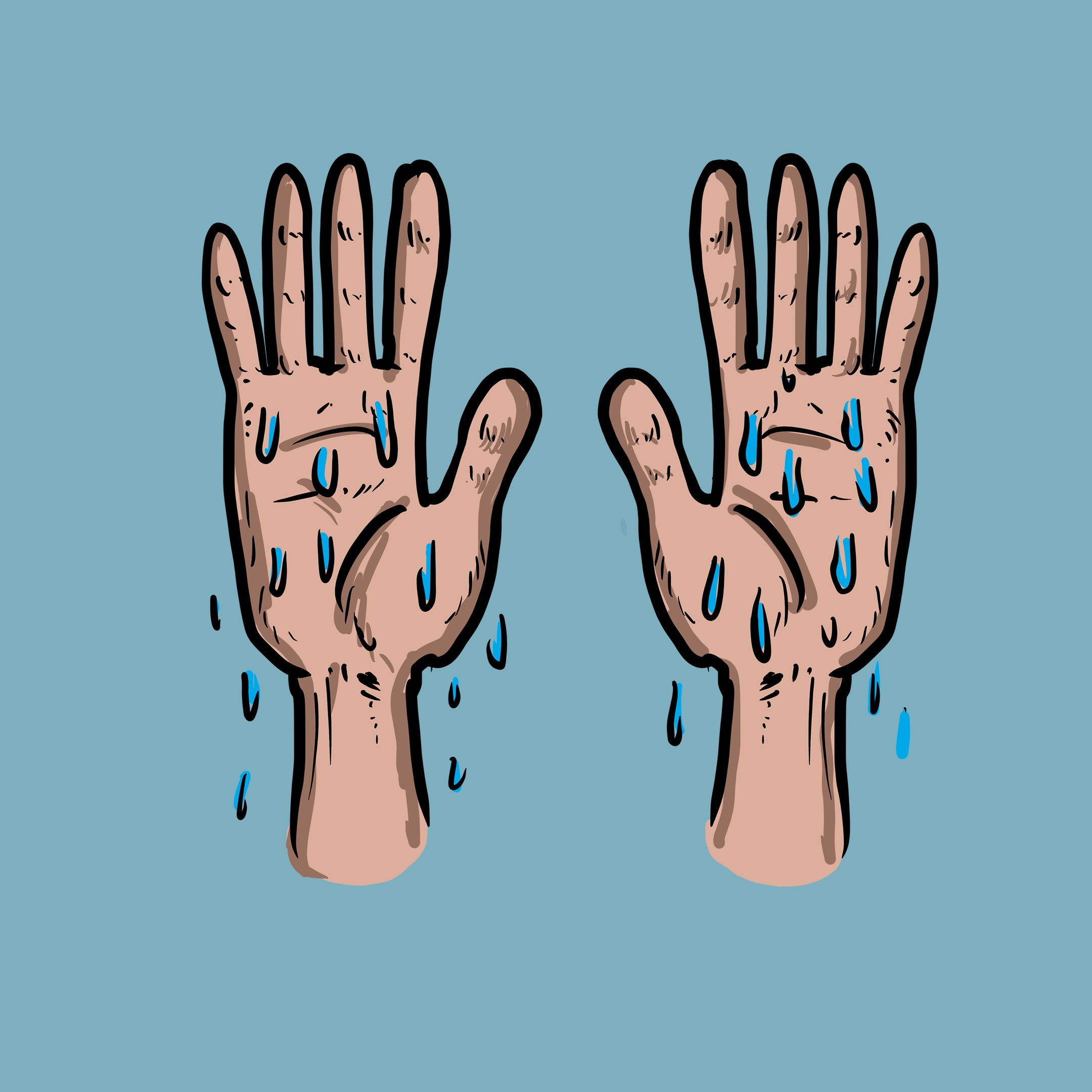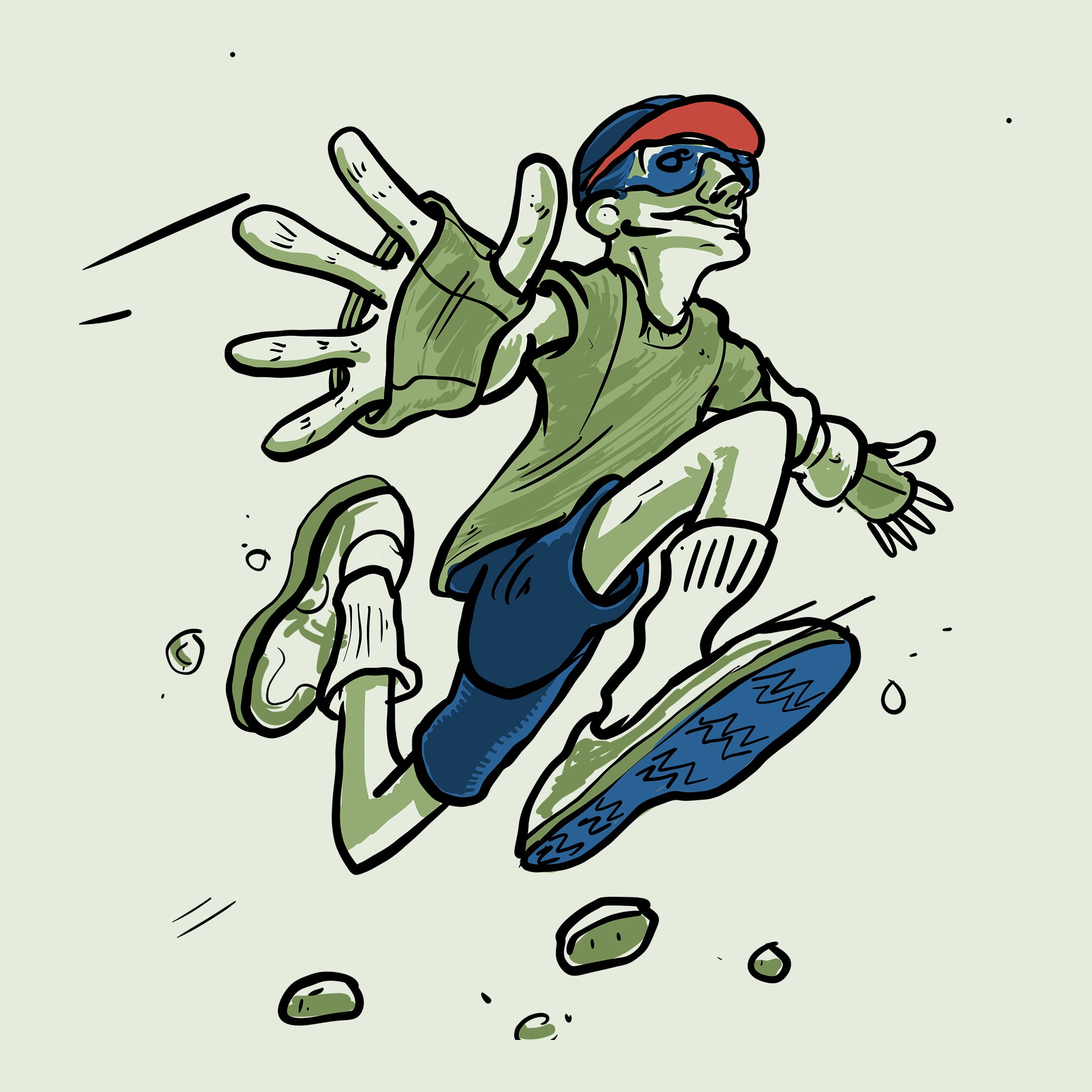

You're two minutes into a run. Your core body temperature has barely budged. Your lungs are just finding rhythm. And yet: your palms are already damp.
This isn't nervousness. It's not a coincidence. It's your body doing something genuinely remarkable — deploying a pre-cooling system in your hands before the rest of you needs it.

---
THE SCIENCE OF PALMAR SWEATING
Your palms contain one of the highest concentrations of eccrine sweat glands in the entire body — up to 370 glands per square centimeter. That density is comparable only to the soles of your feet.
But the sweating that happens in your hands during exercise operates differently from the thermoregulatory sweating on your torso or forehead. Palmar sweating is largely controlled by the sympathetic nervous system and has both emotional and anticipatory components. Research published in the Journal of Applied Physiology has demonstrated that hand sweating during exercise begins at lower core temperatures than axillary or forehead sweating — essentially a pre-emptive response.
Your nervous system reads the signals of incoming exertion — elevated heart rate, increasing respiration — and primes your palms for heat dissipation before your core temperature has meaningfully risen. It's a preparation signal, not a response signal.
---
WHY THIS MATTERS FOR ATHLETES AND ACTIVE PEOPLE
This early sweat response in the hands is useful physiologically but creates real performance challenges:
Grip reduction: Even mild moisture on the palms measurably reduces friction coefficient and grip strength. Research shows moderate palmar sweat can decrease grip force by up to 20% — a significant impact for cyclists, climbers, rowers, and anyone using tools or equipment.
Comfort and focus: The sensation of wet, slippery hands during exercise is a distraction and source of discomfort that affects training quality and confidence in movements.
Equipment damage and hygiene: Persistent hand sweat saturates grip tape, handlebar wraps, and glove linings, shortening equipment lifespan and creating hygiene issues over time.
---
THE DESIGN CHALLENGE FOR HAND PROTECTION
Understanding this pre-cooling mechanism matters for how we think about hand gear in sport. Traditional gloves trap heat and moisture — they interfere with the very mechanism your nervous system is trying to execute. The ideal hand protection during exercise manages moisture while allowing this thermoregulatory system to function, rather than fighting it.
Flipmits are designed with this biology in mind: breathable construction that works with palmar moisture management rather than sealing it in, keeping hands protected without disrupting the body's own cooling architecture.
---
THE BIGGER PICTURE
Your hands sweating first during exercise is an elegant example of the body's anticipatory intelligence. Your nervous system doesn't wait to be overheated — it prepares. The pre-cooling of the palms is a physiological head-start, part of a highly coordinated system for managing thermal load during movement.
Next time you notice damp palms before you're even breathing hard, recognize it for what it is: your body doing its job, early and precisely, just like it was built to.
---
SOURCES & FURTHER READING
- Sympathetic control of palmar sweating: Kuno, Y. (1956). Human Perspiration. Thomas, Springfield.
- Journal of Applied Physiology: "Onset of sweating in the palm and forehead during exercise" — various editions
- Taylor, N.A.S. (2006). "Eccrine sweat gland structure, function and distribution." Journal of Thermal Biology.
- International Society of Sports Nutrition: thermoregulation and performance reviews
INTERNAL LINK SUGGESTIONS
- Link to Flipmits product page: "breathable hand mitts for running and cycling"
- Link to related article: "Sweaty Palms: The Anatomy of Your Hardest-Working Skin" (Article 7 in this series)
- Link to related article: "Skip the Grip Slips: How Hand Sweat Costs You Performance" (Article 8 in this series)