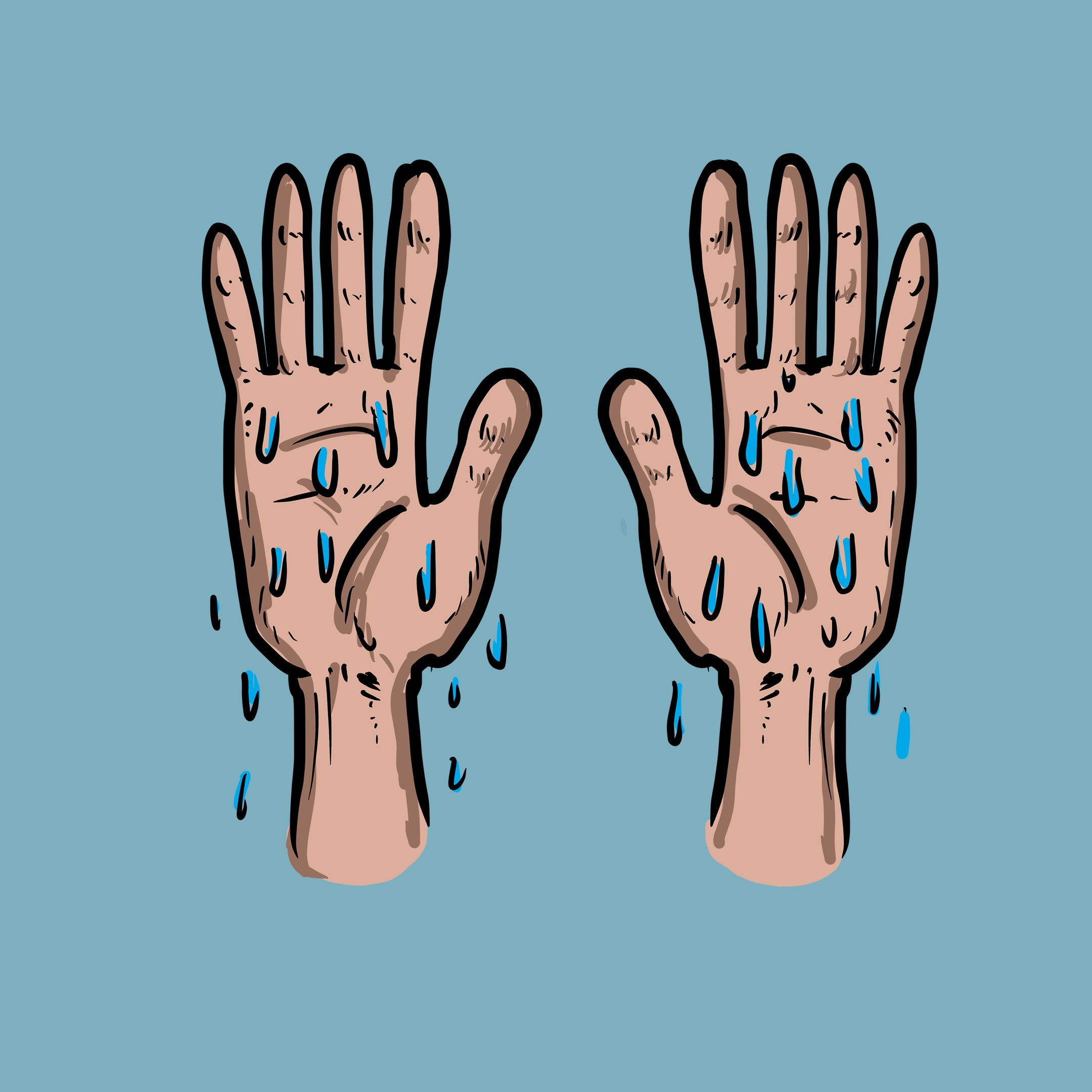

You assumed it was osmosis — water seeping into your skin, puffing and puckering the outer layers like a raisin. It's a reasonable explanation. It's also wrong.
Your fingers don't wrinkle in water by accident. Your nervous system does it on purpose — and the reason why is quietly extraordinary.
---

THE OLD THEORY VS. THE SCIENCE
For most of the 20th century, the accepted explanation for water-induced finger wrinkling was passive osmosis. Water, the theory went, crossed the outer skin barrier and swelled the underlying tissue, causing the characteristic pruning pattern.
This theory fell apart when researchers studied patients with peripheral nerve damage. In those patients — where the sensory nerves in the fingers had been disrupted — the fingers did not wrinkle when submerged in water. This was a critical observation: if wrinkling were purely a passive osmotic effect, nerve damage shouldn't affect it. The fact that it did meant the nervous system was actively controlling the process.
A 2011 study published in Brain, Behavior and Evolution by Mark Changizi and colleagues formalized this understanding, proposing that the wrinkle patterns in water-soaked fingers function like tire tread — channeling water away from the contact surface to improve friction and grip.
---
WRINKLING AS A TRACTION SYSTEM
The wrinkle patterns that form are not random. They follow vein-like channels that radiate from the fingertip. Water flows along these channels and is displaced from the contact zone between your fingertip and a wet surface, improving the skin-to-surface contact needed for grip.
A 2013 study in Biology Letters (Kareklas et al.) provided the first experimental evidence supporting this: participants with wrinkled fingers moved wet objects faster than those with non-wrinkled fingers in a simulated handling task. The advantage disappeared on dry objects — confirming the tread theory. The wrinkle effect is specific to wet-surface grip.
This is your nervous system deploying a precision tool: it detects the sustained presence of moisture, activates the sympathetic response in the digital arteries of the fingers (causing them to contract and pulling the skin inward along those channels), and creates a temporary traction enhancement system.
Your hands grow tread automatically. No conscious input required.
---
WHAT THIS TELLS US ABOUT HAND DESIGN
The prune effect is a small but illuminating window into how deeply sophisticated the human hand is. It's not just a mechanical grasping tool — it's a sensory, adaptive system that continuously adjusts to environmental conditions.
In wet outdoor environments — kayaking, fishing, trail running in rain, gardening — this natural traction response is active. Understanding it reinforces why hand protection in wet conditions needs to work with the hand's natural mechanics, not against them. Gloves that trap moisture without allowing the hand's surface dynamics to function effectively can actually impair the very system your nervous system is trying to activate.
---
THE TAKEAWAY
Next time your fingertips prune in the pool or the shower, you're watching your sympathetic nervous system execute a wet-weather grip optimization protocol. It's elegant, it's purposeful, and it's been with us since our ancestors needed reliable grip on wet rocks and slippery terrain.
Your hands were built for the wet world. The wrinkles are the proof.
---
SOURCES & FURTHER READING
- Changizi, M., Weber, R., Kotecha, R., & Palazzo, J. (2011). "Are wet-induced wrinkled fingers primate rain treads?" Brain, Behavior and Evolution. brain.behavior.evolution
- Kareklas, K., Nettle, D., & Smulders, T.V. (2013). "Water-induced finger wrinkles improve handling of wet objects." Biology Letters.
- Wilder-Smith, E.P.V. & Chow, A. (2003). "Water-immersion wrinkling is due to vasoconstriction." Muscle & Nerve.
INTERNAL LINK SUGGESTIONS
- Link to Flipmits wet-weather or water sport mitts
- Link to related article: "Good From the First Drop: Pre-Cooling Science" (Article 2)
- Link to related article: "Skip the Grip Slips" (Article 8)